

Branding Guidelines
Tech Terms Daily – Branding Guidelines
Category — GRAPHIC DESIGN
By the WebSmarter.com Tech Tips Talk TV editorial team
1 | Why Today’s Word Matters
A strong brand isn’t just about a great logo—it’s about how every visual, message, and customer interaction works together to create a consistent identity. In 2025’s crowded digital market, consumers expect brands to feel instantly recognizable, whether they’re looking at your website, scrolling past a social media post, or opening a marketing email.
That level of consistency doesn’t happen by accident—it’s built through branding guidelines. These documented rules and standards ensure that every designer, marketer, or team member creates materials that look, sound, and feel like your brand.
Without them, you risk sending mixed messages, diluting your visual identity, and confusing customers. With them, you maintain a cohesive, professional presence that builds trust and recognition over time.
2 | Definition in 30 Seconds
Branding Guidelines (Graphic Design):
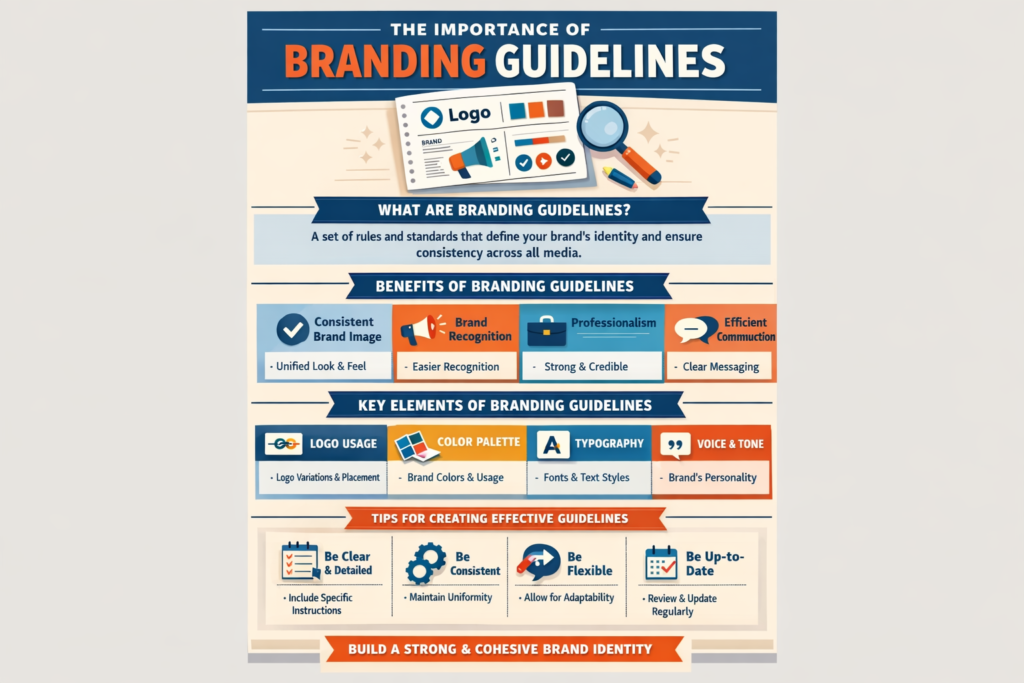
A comprehensive set of rules and standards that define how a brand’s visual and verbal elements should be used across all platforms and materials to maintain a consistent identity.
It answers four core questions:
- What are the approved colors, fonts, and logo formats?
- How should our tone of voice sound in different contexts?
- How do we keep visuals consistent across web, print, and social?
- What should never be done with our brand elements?
Think of branding guidelines as your brand’s rulebook—keeping every piece of content aligned with your identity, no matter who creates it.
3 | Why Branding Guidelines Are Essential
| Without Branding Guidelines | With Branding Guidelines |
| Inconsistent visuals and tone | Unified look and message across channels |
| Confused or diluted brand identity | Strong, recognizable brand presence |
| Time wasted on guesswork | Faster content creation with clear rules |
| Lower customer trust | Professional, dependable brand image |
| Extra costs from repeated revisions | Efficient design process with fewer errors |
4 | Key Components of Effective Branding Guidelines
- Logo Usage Rules – Approved versions, spacing requirements, size limitations, and placement guidelines.
- Color Palette – Primary, secondary, and accent colors with HEX, RGB, and CMYK codes.
- Typography – Approved fonts for headings, subheadings, and body text, including sizing and spacing rules.
- Imagery Style – Photography style, illustration guidelines, and acceptable treatments or filters.
- Iconography – Style rules for icons, symbols, and graphic elements.
- Layout & Composition – Standard grid systems, alignment rules, and spacing conventions.
- Tone of Voice – Brand personality in written communication, with examples for different scenarios.
- Do’s and Don’ts – Visual examples of correct and incorrect uses of brand assets.
5 | Five-Step Blueprint for Creating Branding Guidelines
- Audit Your Existing Brand Assets
Review current logos, colors, fonts, and marketing materials for consistency. - Define Your Brand Identity
Document your mission, values, and personality to guide design choices. - Set Visual Standards
Choose your official logo files, typography, and color palette. - Provide Clear Examples
Show both correct and incorrect applications to avoid misinterpretation. - Make Guidelines Accessible
Store them online in a shareable format so your team and vendors can access them easily.
6 | Common Mistakes (and How to Fix Them)
| Mistake | Negative Effect | Quick Fix |
| Vague or incomplete guidelines | Inconsistent results | Include detailed specs and visual references |
| Overly rigid rules | Stifles creativity | Allow flexibility within brand parameters |
| No digital-specific instructions | Poor online presentation | Add web and mobile design rules |
| Ignoring tone of voice | Mixed messaging | Document copywriting style and examples |
| Not updating regularly | Outdated visuals and messaging | Review and update at least once a year |
7 | Advanced Branding Guidelines Tactics for 2025
- Interactive Online Guidelines – Use platforms like Frontify or Zeroheight for real-time updates and easy sharing.
- Component Libraries – Include reusable design components for web and app teams.
- Cross-Platform Adaptations – Specify variations for social, email, video, and other channels.
- Accessibility Standards – Include color contrast, font legibility, and inclusive design practices.
- AI-Ready Brand Assets – Prepare guidelines for AI-generated visuals to maintain consistency.
8 | Recommended Tool Stack
| Purpose | Tool / Service | Why It Rocks |
| Brand Asset Management | Brandfolder, Bynder | Centralized storage for logos, fonts, and templates |
| Interactive Guidelines | Frontify, Canva Brand Kit | Cloud-based, easy-to-update guides |
| Typography Management | Google Fonts, Adobe Fonts | Access and manage approved fonts |
| Color Palette Tools | Coolors, Adobe Color | Test and share brand colors |
| Collaboration | Figma, Miro | Real-time team updates and feedback |
9 | Case Study: Turning Chaos into Consistency
A WebSmarter.com retail client had multiple marketing vendors producing materials.
Before:
- Different shades of brand colors in every ad.
- Three variations of the logo circulating.
- Social media posts with mixed tone—some formal, some overly casual.
After WebSmarter’s Branding Guidelines Implementation:
- Created a complete brand manual with visual examples and tone-of-voice guidance.
- Standardized logo usage and color codes for digital and print.
- Established a shared online asset library for all vendors.
Result:
- Consistent visuals across all campaigns.
- 41% increase in brand recognition in consumer surveys.
- Reduced creative turnaround time by 35%.
10 | How WebSmarter.com Makes Branding Guidelines Turnkey
- Brand Audit – Identify inconsistencies and gaps in your current visual and messaging strategy.
- Custom Guideline Creation – Develop tailored rules for your brand’s unique personality and goals.
- Template Design – Provide ready-to-use templates for common marketing materials.
- Digital Asset Management Setup – Organize and host your logos, fonts, and imagery in one easy-access location.
- Training for Teams & Vendors – Ensure everyone understands and follows the guidelines.
11 | Wrap-Up: Consistency Builds Trust
Branding guidelines aren’t just about aesthetics—they’re about making your brand recognizable, trustworthy, and memorable. Every consistent touchpoint builds familiarity, and familiarity drives loyalty.
With WebSmarter’s expertise, you’ll get a branding guideline system that keeps your visual identity sharp, your messaging aligned, and your creative process streamlined.
🚀 Book your Branding Guidelines Consultation today and start building a brand your customers recognize instantly.



You must be logged in to post a comment.