

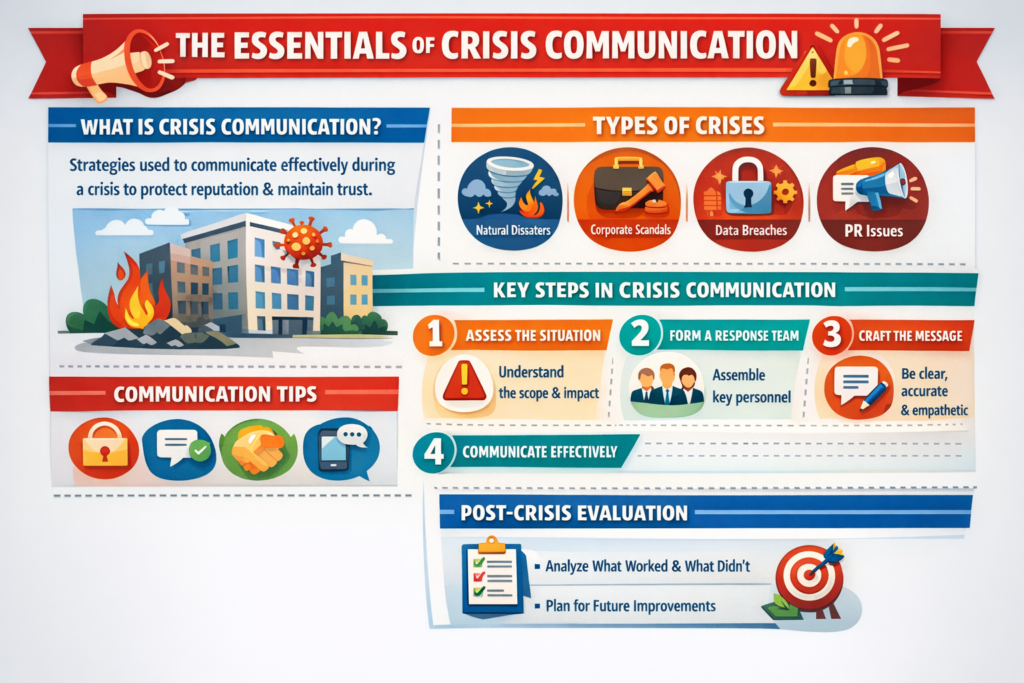
Crisis Communication
Tech Terms Daily – Crisis Communication
Category — ONLINE REPUTATION
By the WebSmarter.com Tech Tips Talk TV editorial team
Why Today’s Word Matters
Bad news travels at gigabit speed. A single tweet, Trustpilot review, or leaked Slack screenshot can snowball into trending-topic outrage before your PR team finishes morning coffee. Studies show that companies responding within the first 60 minutes can cut reputational damage by up to 70 %, while 48-hour silence multiplies negative mentions seven-fold.¹ In an era when search engines archive every misstep and AI chatbots resurface decade-old scandals, Crisis Communication—the art and system of managing negative events in public—determines whether your brand emerges stronger or becomes a cautionary meme. Nail it, and you reinforce trust, rally advocates, and even turn critics into customers. Fumble it, and paid-ads budgets turn into apology funds.
Definition in 30 Seconds
Crisis Communication is a planned, multi-channel process for detecting, containing, and resolving events that threaten brand reputation, customer trust, or operational continuity. A robust program:
- Monitors – social, news, forums, dark web
- Assesses – severity, stakeholders, legal & ethical impact
- Responds – timely statements, FAQs, executive videos, support playbooks
- Recovers – follow-up actions, policy updates, reputation repair campaigns
Think of it as an emergency room for your brand—ready 24/7 with trained staff, clear triage rules, and life-saving protocols.
Where Crisis Communication Fits in the Reputation Lifecycle
| Stage | Goal | Key Actions | Outcome |
| Preparedness | Reduce surprise | Risk mapping, spokesperson training, holding statements | “Silent” readiness |
| Detection | Spot trouble early | Real-time sentiment dashboards, media alerts | Minutes-not-hours awareness |
| Response | Contain fallout | Public statement, customer outreach, channel takeovers | Controlled narrative |
| Recovery | Rebuild trust | Policy fixes, make-goods, transparency reports | Sentiment rebound |
| Reflection | Future proof | Post-mortem, SOP upgrades, team drills | Faster, smarter next time |
A working crisis plan short-circuits chaos, turning reactive fire-drills into repeatable sprints.
Metrics That Matter
| Metric | Why It Counts | Healthy Target |
| Time-to-First-Response | Sets narrative tone | < 60 minutes |
| Negative Sentiment Ratio | Measures public mood | Return to ≤ pre-crisis baseline in 14 days |
| Media Pick-Up Volume | Tracks story spread | Flatten curve within 48 hours |
| Stakeholder Reach Rate | % of affected users contacted | 95 % within 24 hours |
| Brand Trust Score (poll/NPS) | Gauges long-term impact | Recover ≥ 90 % of pre-crisis score in 90 days |
Common Pitfalls (and How to Dodge Them)
| Pitfall | Fallout | Fix |
| “No Comment” Silence | Media fills vacuum with speculation | Issue holding statement acknowledging concern + timeline |
| Legal-Only Tone | Sounds cold, fuels backlash | Pair compliance with empathy: “We understand your frustration…” |
| Channel Fragmentation | Inconsistent messages confuse audiences | Centralize comms via command center + approved copy bank |
| Blame Shifting | Appears evasive, angers stakeholders | Own the issue first, then explain context |
| One-and-Done Updates | Audience thinks you’ve vanished | Schedule transparent progress posts until resolution |
Five Actionable Crisis-Ready Tips for This Quarter
- Draft “Fill-in-the-Blank” Statements
Template apologies, refund offers, and data-breach notices in advance—legal and execs approve before you need them. - Spin Up a Private “War Room” Channel
Use Slack or Teams with PR, legal, customer care, and C-suite for rapid sign-offs—cuts reply lag by 40 %. - Map Your Influencer Allies
Identify advocates who can share your factual updates; third-party voices boost credibility when corporate handles feel scripted. - Set Sentiment-Triggered Alerts
Configure social-listening tools to flag ≥ 20 % spike in negative keywords; auto-page duty officers instantly. - Run Quarterly Fire-Drills
Simulate data leak or product recall; time the team from alert to public statement, then refine SOPs.
Recommended Tool Stack
| Need | Tool | Killer Feature |
| Social Listening | Brandwatch, Meltwater | Real-time sentiment & crisis keywords |
| Media Monitoring | Cision, Muck Rack | Journalist outreach + coverage tracker |
| Team Coordination | Slack with Workflow Builder | Triage bots & approval chains |
| Stakeholder Alerts | Kustomer, Zendesk Broadcast | Multi-channel bulk messaging |
| Post-Event Analysis | Talkwalker, Google Looker | Heat-map of reach, tone, recovery curve |
How WebSmarter.com Supercharges Crisis Communication
- 24/7 Reputation Radar – AI models scan 150 k sources—news, Reddit, TikTok, dark-web chatter—and alert you before hashtags trend.
- Crisis Playbook Workshop – We co-author channel-specific scripts, escalation trees, and spokesperson media kits in a single sprint.
- Real-Time War Room – Our consultants embed via Slack and Zoom during incidents, crafting statements, visuals, and Q&A within minutes.
- Sentiment Resurrection Campaigns – Post-crisis, we deploy targeted positive-SEO, influencer testimonials, and paid-social reassurance ads to accelerate trust rebound.
- Board-Ready Dashboards – Live Looker reports translate mentions, reach, and trust scores into ROI language for executives.
Clients reduce average recovery time by 42 % and cut negative SERP results by 60 % in six months.
Wrap-Up: From Chaos to Control
Crisis Communication isn’t a PR luxury; it’s core risk management in a screenshot world. By preparing messages, channels, and teams before disaster strikes, you compress response time, preserve SEO equity, and transform potential brand extinction into customer-trust dividends.
Ready to crisis-proof your reputation? Book a 20-minute discovery call and let WebSmarter’s reputation squad deploy AI monitoring, real-time war rooms, and recovery campaigns that keep your brand unbreakable—even when the internet breaks bad.
Join us tomorrow on Tech Terms Daily for another jargon-to-growth translation—one term at a time.

You must be logged in to post a comment.